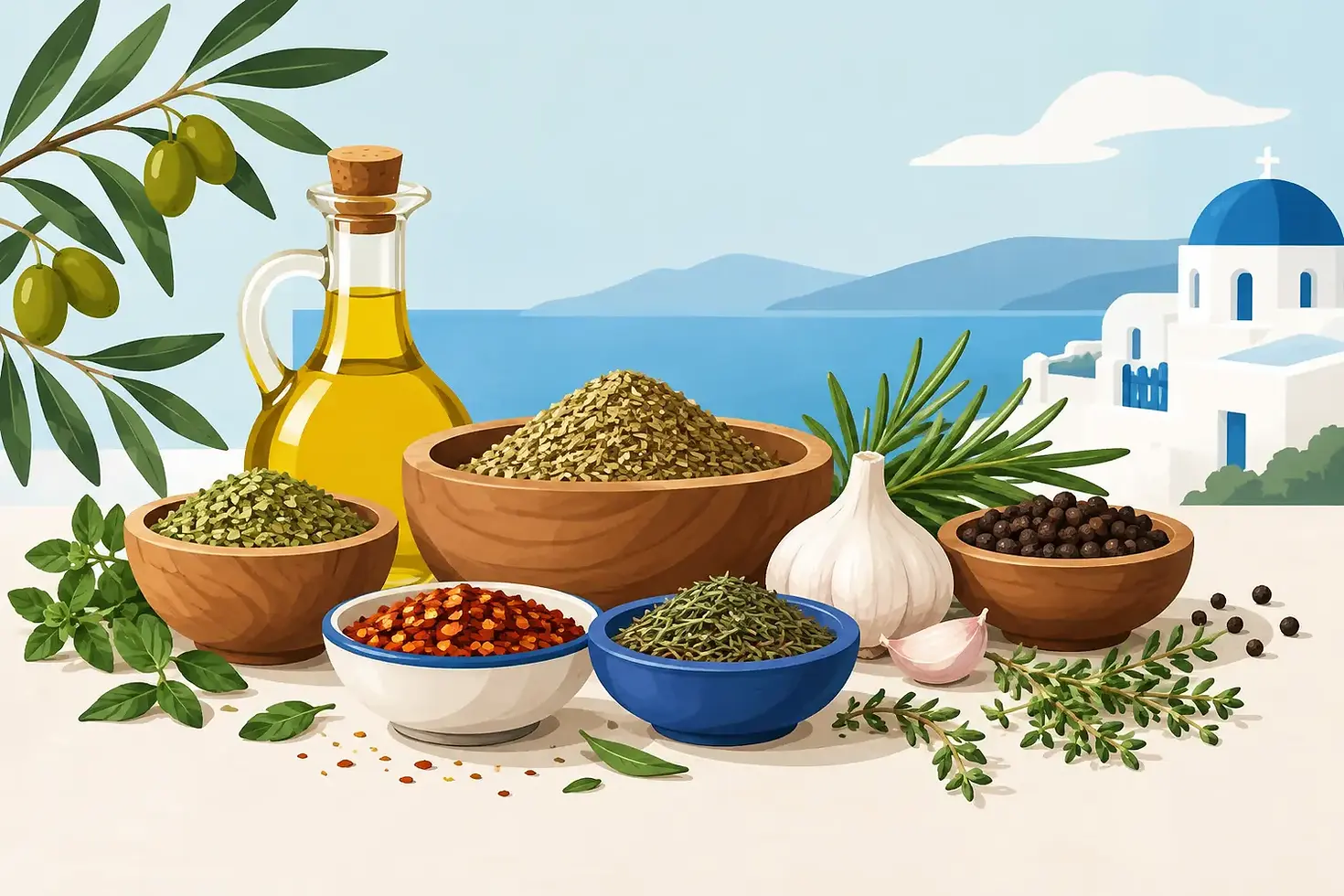
Greek Spices Used in Cooking That Build Big Flavor
A gyro does not need a dozen ingredients to taste memorable. The right balance of garlic, oregano, pepper, lemon, and warm spices can turn seasoned meat, fresh vegetables, and pita into the kind of meal people come back for. Greek spices used in cooking are all about that balance: bright without being sharp, savory without becoming heavy, and familiar enough to work with foods everyone at the table enjoys.
For Fayetteville families, lunch-break regulars, and anyone feeding a mixed group, this matters. Greek seasoning can bring serious flavor to chicken, beef, potatoes, salads, and wraps, while still leaving room for the fresh toppings and sauces that make Mediterranean food so satisfying.
Greek Spices Used in Cooking Start With Balance
Greek food is often described as simple, but simple is not the same as plain. Olive oil, lemon, garlic, herbs, spices, salt, and black pepper each have a job to do. A good seasoning approach lets the main ingredient still taste like itself. Chicken should taste like chicken. Roasted potatoes should taste like potatoes. The seasoning should make both better.
That is why Greek cooking is not usually about dumping in a heavy pre-made blend. Oregano may lead in one dish, while cumin, coriander, or cinnamon quietly support another. The result depends on the food, the cooking method, and whether the dish will be finished with lemon, feta, tzatziki, or a bold sauce.
A dry rub also behaves differently from a marinade. Spices in a dry rub sit close to the surface and develop flavor as the food cooks. In a marinade, olive oil and acid carry flavor deeper over time. Lemon is excellent, but too much acid for too long can change the texture of meat, especially smaller chicken pieces. For a quick weeknight meal, a short marinade often gives better results than an all-day soak.
The Core Greek Seasonings for Everyday Meals
Oregano: The Familiar Greek Flavor
Greek oregano is the flavor many people recognize first in a Greek salad, grilled chicken, roasted vegetables, or gyro-inspired plate. It has an earthy, slightly peppery character that holds up well to olive oil and lemon. Dried oregano is especially useful because it is concentrated and dependable in marinades, dressings, and roasted dishes.
Use it with chicken, lamb, beef, potatoes, tomatoes, and feta. If you are making a simple vinaigrette, start modestly. Oregano can take over a cold dressing faster than it takes over a hot dish.
Garlic and Black Pepper: The Savory Foundation
Garlic is technically an aromatic rather than a spice, but Greek-style food would feel incomplete without it. Fresh garlic gives a sharper bite, while garlic powder distributes easily through a dry seasoning mix. Both have a place in a busy kitchen.
Black pepper adds warmth, not just heat. It is especially good in meat seasoning, salad dressings, and creamy sauces. Freshly ground pepper gives a cleaner, more noticeable flavor, while finely ground pepper is better when you want it to blend into a marinade or burger mixture.
Cumin and Coriander: Warmth Without Weight
Cumin is more common in Greek-influenced meat preparations and the broader Eastern Mediterranean than in every classic Greek recipe. That distinction is worth remembering. A little cumin brings a toasted, earthy note to ground beef, chicken, shawarma-style meat, and roasted chickpeas. Too much can pull a dish away from the clean, herb-forward Greek profile people expect.
Coriander has a mild citrusy warmth that works well beside cumin, garlic, and lemon. It is a smart choice for chicken wraps and grilled meats. Use both with a light hand, especially if oregano is already present.
Paprika: Color and Gentle Depth
Paprika gives food a warm red color and a mild pepper flavor. Sweet paprika works beautifully in chicken, potato seasoning, and meat blends. Smoked paprika can be delicious, but it changes the direction of the dish. It adds a barbecue-like smokiness that is not traditional in every Greek preparation, so use it when that is the flavor you want, not automatically.
Cinnamon and Allspice: The Unexpected Savory Notes
Cinnamon and allspice are not only for desserts. In parts of Greece and throughout Mediterranean cooking, small amounts add warmth to meat sauces, stuffed vegetables, and ground-meat dishes. They should be background flavors. If the first thing someone says is, “This tastes like cinnamon,” the seasoning went too far.
A tiny pinch can round out a tomato-based meat sauce or a beef mixture for stuffed peppers. These spices pair particularly well with onion, tomato, and a touch of sweetness from slow cooking.
Herbs Matter Just as Much as Spices
When people talk about Greek spices, they often mean a mix of spices and herbs. That makes sense at the table, because the flavors work together. Oregano is the standout, but dill, mint, parsley, thyme, and rosemary all play important roles.
Dill brings a fresh, grassy flavor to yogurt sauces, cucumber dishes, and potatoes. Mint cuts through rich lamb and works well in salads and meat fillings. Parsley adds freshness without demanding attention. Rosemary is stronger and piney, making it a great match for roasted potatoes, lamb, and chicken but less ideal for delicate yogurt sauces.
Fresh herbs and dried herbs are not interchangeable in equal amounts. Dried herbs are more concentrated, especially oregano and thyme. Fresh dill, parsley, and mint are usually best added near the end, when their clean flavor can stay bright.
How to Build a Greek-Style Seasoning Mix
For everyday cooking, keep the blend practical. Combine dried oregano, garlic powder, onion powder, black pepper, sweet paprika, and a small amount of cumin. Add salt separately when possible, especially if feta, olives, broth, or a store-bought sauce will be part of the meal. That gives you more control over the final dish.
For chicken or pork, add lemon zest to the finished food or stir it into a quick marinade with olive oil and lemon juice. For beef, use a little more black pepper and paprika, with cumin kept in the background. For roasted potatoes, oregano, garlic, paprika, salt, pepper, olive oil, and lemon are hard to beat.
If you are seasoning gyro-style meat at home, do not expect one spice blend to do all the work. The flavor develops through the meat, the seasoning, the cooking, and the toppings. Crisp lettuce, tomatoes, onions, creamy tzatziki, and warm pita each bring contrast. A well-seasoned filling tastes even better when it has something cool, fresh, and tangy beside it.
Common Mistakes That Flatten the Flavor
The biggest mistake is treating every Greek dish like it needs the same blend. A Greek salad needs restraint: olive oil, oregano, pepper, and the salty bite of feta and olives do plenty. Grilled chicken can handle more garlic and paprika. A tomato-based meat dish may welcome a small touch of cinnamon or allspice.
Another common issue is using old dried spices. Dried oregano and paprika do not last forever. When they smell dusty or faint, they will make food taste flat no matter how much you add. Buy amounts you will use, keep them away from heat and sunlight, and replace them when the aroma is gone.
Finally, do not skip the finishing ingredients. Seasoning builds the base, but lemon juice, good olive oil, chopped herbs, feta, and a pinch of salt at the end make the flavor feel alive. Taste before serving. A dish that seems bland may not need more cumin or garlic. It may simply need lemon, salt, or pepper.
Bring Greek Flavor to a Table With Many Appetites
Greek-inspired seasoning is useful because it works beyond one kind of meal. It can brighten grilled chicken for a wrap, give roasted potatoes more personality, add interest to a side salad, or bring a savory edge to a burger patty. That flexibility is part of why Mediterranean food fits so naturally beside sandwiches, wings, pizza, and other crowd-pleasing favorites.
At Army City Steak & Gyro, that same idea makes ordering for a family or group easier: one person can go for a gyro or Greek salad while someone else chooses a burger, wings, pizza, or a hearty sandwich. Great food should not make the table choose just one direction.
Keep a few dependable Greek seasonings in the cabinet, use them with intention, and let fresh lemon, olive oil, and herbs do their part. A flavorful meal does not need to be complicated - it just needs the right finish.



Comments